The Real Kyoto Travel Guide: How to Actually Get the Ultimate Experience
Kyoto rewards the traveler who slows down. A district-by-district plan, the time-of-day hack that beats the crowds, and where to eat and drink without falling into a tourist trap.

 Search flights
 So you're planning a trip to Japan, and Kyoto is at the top of your list. Right where it should be. But here's the thing about Kyoto that most people don't realize until they're stuck on a bus for forty-five minutes between Fushimi Inari and Kinkaku-ji: the city is deceptively spread out, and the crowds are no joke. Over 56 million visitors came through in 2024, with a record-breaking 11 million from overseas. That's a lot of people trying to get the same Instagram shot.

The ultimate Kyoto experience isn't about hitting every temple on a checklist, there are over 2,000 of them, and trying to see them all is a fool's errand. It's about rhythm, about knowing when to show up, and about being willing to wander away from the tour buses. Here's what actually works.
Why most travelers get Kyoto wrong (and how you can avoid it)
The single biggest mistake people make is planning by individual spots instead of by district. You cannot do Arashiyama, Fushimi Inari, and Gion in one day. You'll spend half your time on transit, the other half in queues, and you'll leave feeling like you barely saw anything.
The smarter play: one district per day, maybe two if they're adjacent and walkable. Arashiyama and northern Kyoto together. Gion, Higashiyama, and the Ninenzaka steps on another day. Fushimi and Nishiki Market separately. This way you're actually walking the streets, ducking into shops, noticing the details. You're not just a passenger on a packed bus. If you're active, rent a bicycle. It cuts travel time by more than half in some cases, and you can stop whenever something catches your eye. The city is mostly flat through the central districts, and bikes are easy to park at most temples.
When to show up: the time-of-day hack that changes everything The people who have the best photos of the Arashiyama Bamboo Grove? They weren't there at 11 AM. They were there at 7 AM, when it's just the sound of bamboo creaking in the wind and maybe a few other early risers. By 9 or 10, the tour groups descend. The same goes for Fushimi Inari and Kiyomizudera. Morning is when Kyoto actually feels like the old Japan people come to find.

Here's a specific itinerary that sidesteps the masses:
7:00 AM, Bamboo Grove, empty, quiet, worth the early alarm.
8:30 AM, breakfast on residential streets, look for a small sign reading handmade soba, you'll pay half what you would in the tourist areas, and the food is better.
10:00 AM, Adashino Nenbutsu-ji, instead of fighting crowds on Arashiyama's main drag, head uphill, ten minutes off the main path, you'll find thousands of moss-covered stone statues arranged in neat rows, silence, crows, incredible peace, maybe one in a hundred tourists makes it here.
Afternoon, Philosopher's Path, walk it in reverse, from Nanzen-ji toward Ginkaku-ji, the main flow of people goes the opposite direction, so you get more space to breathe.
Evening, Fushimi Inari at sunset, the trail of red torii gates is open 24/7, most tourists clear out by late afternoon, climb for thirty or forty minutes to find a viewpoint, watch the sun set behind the hills, then descend as the path lights up, the illuminated gates at dusk are honestly magical.
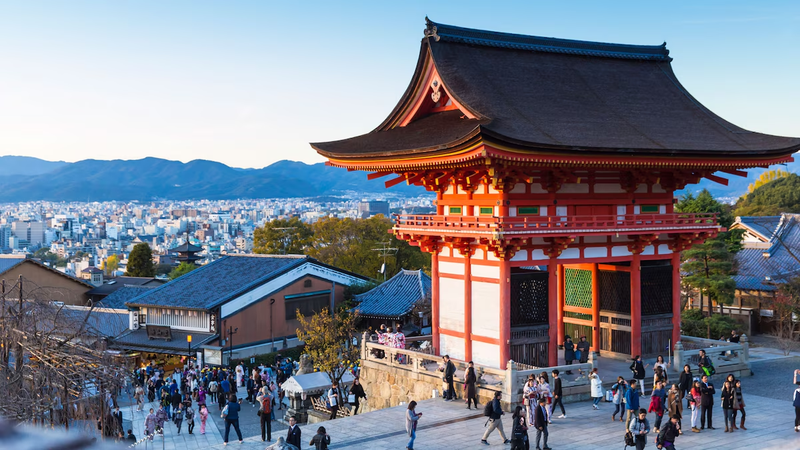
The places that actually deliver (and one that surprised me) Fushimi Inari Taisha, the endless red gates. They look even better in person than in photos. The further you climb, the fewer people you'll see. Small shrines, stone foxes, and observation points line the way.
Kinkaku-ji (Golden Pavilion), yes, the top two floors are genuinely covered in gold leaf. You can't enter the building, but the reflection across the pond is what you came for anyway. It's not a long visit, about forty minutes, but it's worth the stop. Sanjusangen-do, this one surprised me. The exterior is plain, but inside? 1,001 golden statues of Kannon, the thousand-armed Buddhist deity. You can't take photos, which is honestly a relief, it leaves you with a feeling instead of just another image. Most people skip it because of the no-photo rule, which means it's less crowded than the big-name temples. Arashiyama, it's not just the bamboo. The whole area is photogenic: Togetsukyo Bridge, the Kimono Forest (free to visit, great light and shadow), and Tenryu-ji Temple with its UNESCO-listed garden. If you have time, check out Okochi Sanso Garden, it's tucked away, meticulously maintained, and feels like a secret world.
 Gion and Higashiyama, late afternoon is the sweet spot. Lanterns start coming on, wooden machiya townhouses glow, and the streets feel like a film set. Walk Sannenzaka and Ninenzaka, pop into small shops. You might even spot a geiko (Kyoto's term for geisha) heading to an evening engagement.
Where to eat and drink without getting tourist-trapped
Nishiki Market is the classic stop, and it's best visited in the morning before it gets slammed. But here's a real tip from someone who knows the city: the flashy, bright stalls are mostly post-pandemic additions that don't necessarily represent Kyoto's food culture. Look for the shops that don't look fancy. Uchida Tsukemono has been selling pickles since 1940, try their stuff. Ochanokosaisai does furikake rice toppings that make great gifts. For sake, head to Fushimi, south of the famous shrine. It has the highest concentration of breweries in Japan. Matsui Sake Brewery has been operating since 1726 and offers English tours by reservation. For something more offbeat, Kizakura Brewery has a kappa museum (the water demon, not the jacket) and a restaurant called Kappa Country where you can try dishes made with sake lees.
For a casual drink, Kobayashi Saketen is a standing bar just off Nishiki Market. Everything is local, beer, gin, sake, and the small plates are seasonal Kyoto fare. There are DJs on weekends, and it's easy to strike up a conversation. For tea nerds, Mandaracha in Gion is the spot. The French owner personally visits farms across Japan and can tell you the story behind every leaf. Vegan sweets, occasional live traditional music on Fridays.
FAQs: How many days do I really need in Kyoto? At least two, but three is better. One day simply isn't enough unless you're okay with a whirlwind tour that hits eight major attractions but leaves you exhausted and blurry-eyed. Three days lets you do one district per day with room to wander. When is the best time of year to visit? February to early March is the sweet spot. You get plum blossoms (which are nearly as beautiful as cherry blossoms), fewer crowds, and lower prices. Summer is hot and sticky; autumn foliage draws massive crowds; spring cherry blossom season is packed. Can I really see maiko or geiko? Yes. If you stay at Dusit Thani Kyoto, they have a maiko (apprentice geiko) perform and serve matcha every Saturday. Otherwise, late afternoon in Gion is your best bet, you might spot one heading to work. What about onsen or traditional bath experiences? If you don't want to trek to a mountain onsen or use a public bath, look into Nazuna's ryokan properties. They renovate traditional homes with private open-air baths in the gardens. It's a smaller, more intimate way to experience Japanese bathing culture.
The bottom line Kyoto rewards the traveler who slows down. You can't see it all, and you shouldn't try. Pick a district, start early, and let the city reveal itself. The temples and shrines are incredible, but the real magic happens in the quiet moments, an empty bamboo path at dawn, a sake bar conversation with a stranger, a moss-covered statue tucked away on a hillside. That's the ultimate experience. That's why people return to Japan again and again, and why any honest Kyoto guide will tell you the same thing.

Covers the destinations, gear and deals worth your inbox for The Nerdy Nomads. Reader-supported via affiliate links.
One email. Five finds. Every Sunday, wherever you've landed.

Guides, deals and visa alerts — free, weekly, unsubscribable in one tap.